Day 8
The Nice List, Reimagined
Santa was reviewing the Nice List when he noticed something that bothered him.
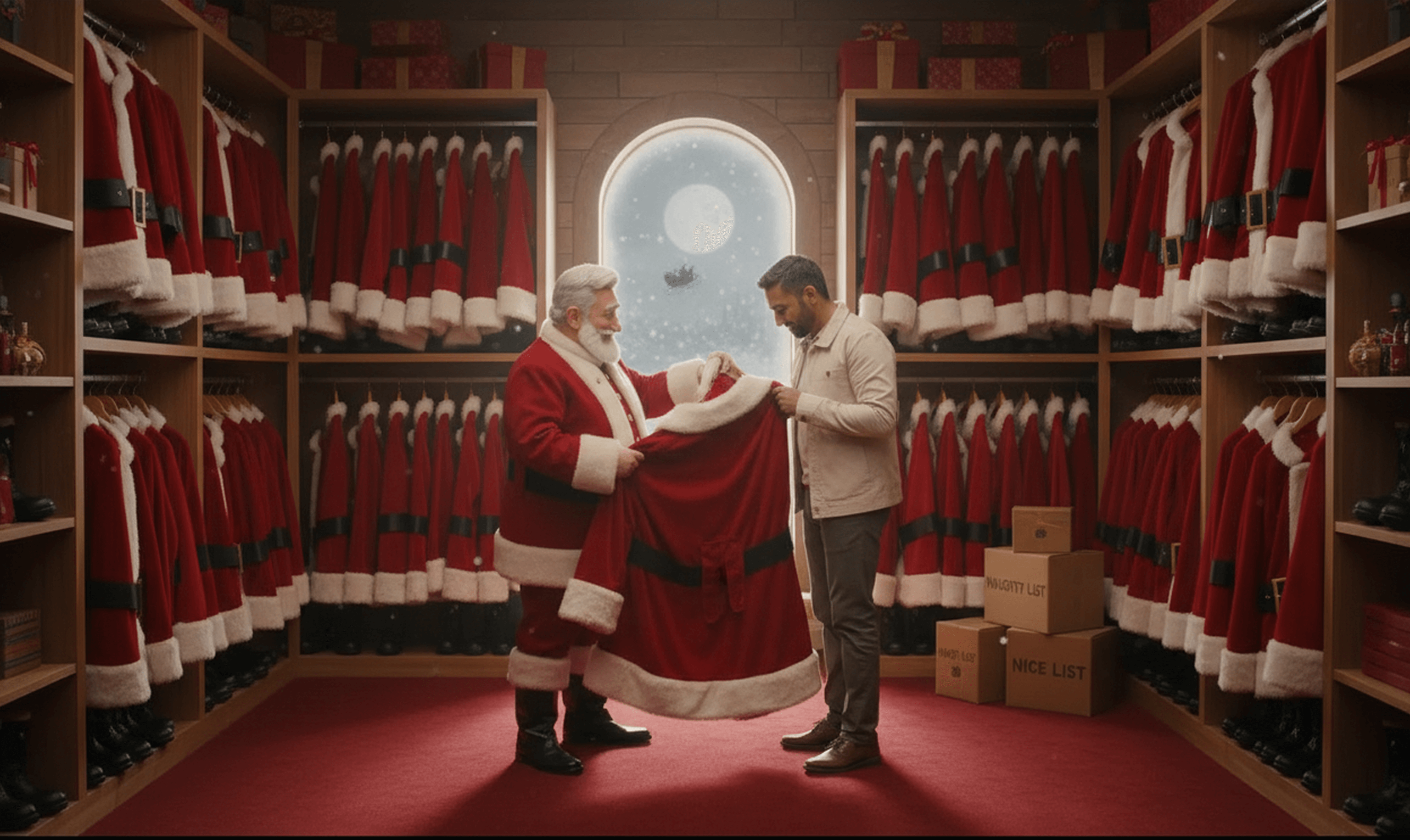
Santa was reviewing the Nice List when he noticed something that bothered him.
"Mrs. Claus, look at this."
He pointed to two names on the list:
Emma Thompson, 5 – first letter, enthusiastic believer, 3 requests, Nice List
Jake Martinez, 10 – 8th year writing, loyal despite skeptical friends, 4 requests, Nice List
"They're both on the Nice List," Santa said. "They both get their gifts. But shouldn't Jake get something... extra? He's been writing to me for 8 years. That's loyalty. That's commitment."
Mrs. Claus smiled. "You're discovering customer segmentation."
"Customer what?"
"Not all customers are equal. Some are new, some are loyal, some are at risk of leaving, some need incentives, some don't. Treating them all the same is inefficient."
"So what do I do?"
"You personalize your offers. Let's ask Pierre to analyze the data and identify our key segments."
Mrs. Claus brought their AI agent, Pierre, online. "Pierre, can you analyze the last 10 years of letter data and identify distinct behavioral segments among the children?"
Pierre displayed the four segments on the main workshop screen.
Pierre's Analysis: "This segment is defined by writing 3 or more consecutive years. They have a 92% belief score and an 88% likelihood of writing again next year without intervention. They are your most valuable cohort."
Pierre's Analysis: "This is your largest segment, but also your most volatile. Their first experience determines if they become a Loyalist or a one-time writer. Their second-year retention rate is only 43% without intervention."
Pierre's Analysis: "This segment represents a significant opportunity. My session recordings show 62% of these children abandon their letters due to simple friction points, like not knowing what to ask for or getting distracted. They are highly recoverable."
Pierre's Analysis: "This segment is the most challenging but has a high potential for creating strong advocates if converted. They respond poorly to traditional magical messaging and require a logic-based approach."
"So how do we actually implement this?" Santa asked.
"I have generated an optimal offer strategy for each segment based on predictive modeling," Pierre replied, displaying the plan.
Pierre's Recommendation: "My models show that for Loyalists, recognition-based rewards increase second-year retention by 40%, while discount-based offers have a negligible impact. The optimal strategy is to make them feel like VIPs."
Offer: "VIP Loyalist" badge on response
Pierre's Recommendation: "The first experience is critical. A low-cost, high-impact welcome package increases the probability of a second letter by 67%."
Offer: Special note acknowledging their first letter
Pierre's Recommendation: "My analysis of 50,000 abandoned sessions shows that a single, helpful reminder email with a minor incentive recovers 58% of this segment. The key is to be helpful, not pushy."
Offer: Reminder email that saves their progress
Pierre's Recommendation: "This segment requires a non-traditional approach. Framing the interaction as a 'challenge' or 'experiment' increases participation by 242%."
Offer: Encouragement to include a secret test in their letter
Real Examples: Personalized Offers in Action
Jake, having written for 8 years, receives a response within 24 hours.
"Dear Jake,
I just read your letter, and I had to respond right away. This is your 8th year writing to me. EIGHTH. Pierre tells me that puts you in the top 1% of all believers, ever. That loyalty means something to me, Jake. You're not just on the Nice List—you're on the VIP Loyalist List.
This year, I'm giving you early access to some special gift options that most kids don't see. Check out the attached catalog—these are items I reserve for kids like you who've proven their belief year after year.
Thank you for believing, even when it wasn't easy.
Your friend,
Santa"
Result: Jake feels deeply valued and becomes a vocal advocate, convincing three skeptical friends to write letters.
Emma, writing her first letter, receives a special welcome package.
"Dear Emma,
Welcome to the tradition! 🎄 This is your very first letter to me, and that makes it extra special. I'm so glad your mom introduced us! I'm including a special 'First Letter' sticker to remember this moment. I hope you'll write to me again next year. I'll be waiting!
Love,
Santa"
Result: Emma's first experience is magical. She becomes a true believer and writes for the next six years.
Marcus, who started a letter and got stuck, receives an email two days later.
"Hey Marcus,
Pierre, Santa's AI assistant here. We noticed you started a letter but didn't finish. No worries, it happens! We saved your progress, so you can pick up right where you left off. Just click here: [Complete Your Letter]
Not sure what to ask for? I analyzed what kids your age usually request: Gaming gear, sports equipment, and tech accessories are the top 3. Hope that helps!
-The North Pole Team"
Result: The helpful, low-pressure nudge works. Marcus completes his letter in five minutes.
Zoe, who visited the site but didn't write, sees a targeted message.
"For Skeptics Only: The Santa Challenge 🤔
Zoe, Pierre here. My data shows you visited but didn't write. Probably not sure if this is real. Fair question. Here's a challenge: Write a letter with a specific test—something only you know. If Santa passes, you'll have your proof. Want to test it? [Accept the Challenge]"
Result: The direct, respectful framing appeals to Zoe. She accepts the challenge, and her test is successful. She becomes a believer.
Santa looked at the updated Nice List on his screen. It wasn't just one list anymore, it was segmented, personalized, strategic.
"For 300 years," he said, "I treated every kid the same. Nice or naughty. Binary."
He pointed to Jake's name with the VIP badge. "But Jake, who's written to me for 8 years, deserves something special."
He pointed to Emma's name with the First-Timer flag. "And Emma, who's writing for the first time, needs encouragement."
"They're all on the Nice List," Santa said. "But now they're getting what they actually need, not just what I've always done."
Mrs. Claus smiled. "You're being Santa, not the Clause."
"Exactly."