Day 5
Santa Gets Personal
Santa walked into the workshop to find Mrs. Claus and Bernard staring intently at a single screen displaying the Google Merchant Center.
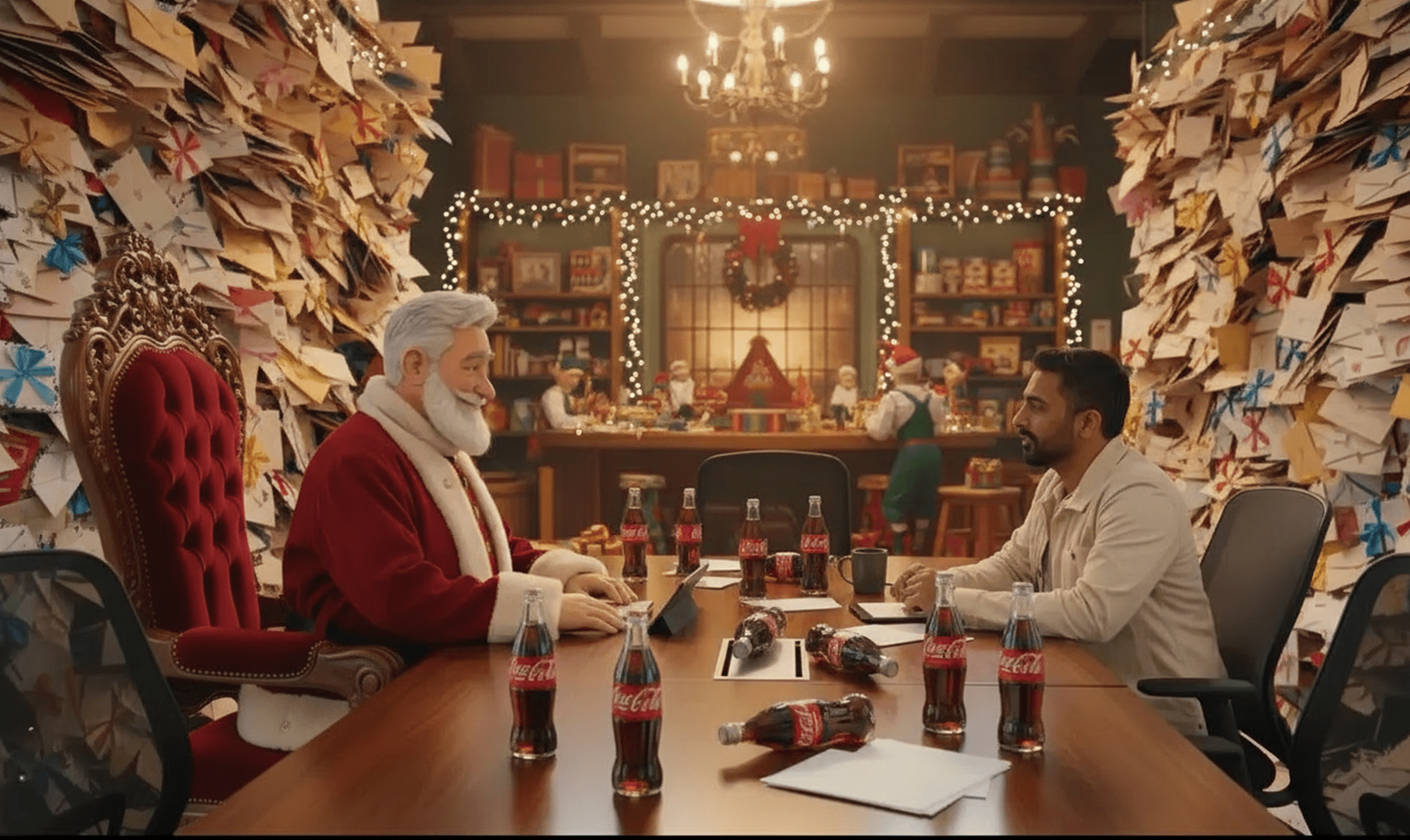
Santa sat in his study, surrounded by letters. Not many, that was part of the problem, but enough to notice a pattern. He picked up one letter:
"Dear Santa, my mom says you're real but my friend says you're not. I don't know what to think. If you're real, can you bring me a skateboard? -Jake, age 10"
Then another:
"Dear Santa, I love you! I've been very good! Can I have a unicorn? Love, Emma, age 5"
And another:
"Santa, I'm writing this because my teacher said we had to. I don't really believe in you anymore but if you are real I guess I want a gaming headset. -Marcus, age 12"
Three very different kids. Three very different levels of belief. Three very different reasons for writing.
And Santa's response to all of them? The same generic template:
"Dear [Child], Thank you for your letter. I've checked my list and you've been very nice this year. I'll do my best to bring what you asked for. Remember to be good and believe in the magic of Christmas. Ho ho ho, Santa"
Mrs. Claus walked in with coffee. "You look troubled."
"I just realized something terrible," Santa said. "I'm treating every child the same. Jake, who's skeptical and needs proof. Emma, who fully believes and just wants magic. Marcus, who's on the fence and needs a reason to care. They all get the same letter from me."
"And that's a problem because...?"
"Because they're not the same! They have different needs, different doubts, different reasons for reaching out. And I'm giving them all the same generic response."
Mrs. Claus sat down. "Tell me more."
Santa spread the letters across his desk. “Look at how these kids found me.”
He organized them into piles:
Pile 1: Parent-Introduced (Ages 4-6)
Pile 2: School/Cultural (Ages 6-8)
Pile 3: Internet/Social Media (Ages 8-10)
Pile 4: Peer-Pressured (Ages 10-12)
"Four completely different audiences," Santa said. "Four different mindsets. Four different needs. And I'm sending them all the same letter."
Mrs. Claus nodded slowly. "That's why your conversion rate is so low. You're not matching the message to the audience."
"Let me show you something," Mrs. Claus said, pulling up her laptop. "This is what we call 'intent mismatch.' It's when the experience you provide doesn't match what the visitor expects based on how they found you."
She pulled up a diagram:
"See the problem?" Mrs. Claus asked. "You're losing kids at every stage because the experience doesn't match their expectations."
Santa nodded grimly. "I'm treating a skeptical 12-year-old the same as a believing 5-year-old. No wonder they're not responding."
Bernard joined them, pulling up a heat map. "I tracked where kids are dropping off and why."
What's happening: Kids arrive at the "Write to Santa" page expecting content relevant to how they found Santa.
What they get: Generic homepage that says the same thing to everyone.
Why they leave: Message doesn't resonate, feels irrelevant
What's happening: Kids who make it to the letter template find it generic and uninspiring.
Current template: "Dear Santa, I have been [good/nice] this year. For Christmas, I would like [gift]. Thank you, [name]"
Why it fails:
What's happening: Kids send letters and get generic responses that don't address their specific concerns.
Current response: "Dear [Child], Thank you for your letter. You've been very nice this year. I'll do my best to bring what you asked for. Ho ho ho, Santa"
Why it fails:
Santa did the math on his whiteboard.
Current State:
If conversion rate improved to 5% (still modest):
If conversion rate improved to 8% (with personalization):
"That's 5,900 more kids believing in Christmas magic," Santa said quietly. "5,900 more families are experiencing the tradition. 5,900 more children learning about generosity and wonder."
He turned to Mrs. Claus. "We have to fix this."
"We will," she said. "Tomorrow."
"And here's the thing that makes this even worse," Bernard said. "Mobile."
He showed Santa the mobile analytics:
Desktop conversion rate: 3.2%
Mobile conversion rate: 1.4%
"Why is mobile so much worse?" Santa asked.
"Because mobile users have even less patience for irrelevant content. If the first thing they see doesn't match what they're looking for, they're gone. And on mobile, you have less space to recover."
Mobile user behavior:
"So not only are you giving everyone the same generic experience," Mrs. Claus said, "but mobile users, who are the majority of your traffic, are even less forgiving of it."
"For 300 years," Santa said, "I've done things one way. One letter template. One response. One experience for everyone."
He turned back to Mrs. Claus and Bernard. "It worked when I was the only option. When kids had no choice but to write to me if they wanted Christmas magic."
"But now?" Mrs. Claus prompted.
"Now they have choices. Amazon. Parents. Gift cards. If I don't give them an experience that speaks to them, individually, they'll choose something else."
He sat down heavily. "I need to personalize. Every kid needs to feel like I understand them, their doubts, their excitement, their specific situation."
"Yes," Mrs. Claus said. "You do."
"So how do we do it? How do we give 100,000 kids 100,000 different experiences?"
Mrs. Claus smiled. "That's tomorrow's lesson. Today, you needed to see the problem clearly. Tomorrow, we will solve it with Dynamic Product Pages."