Introducing Commerce Graph
April 21, 2026
Retailers have more data about their customers than ever before and still cannot answer basic questions about site behavior without weeks of manual analyst work. The data exists, but it lives in fragments across session replays, heatmaps, analytics, and CDPs. It still takes manual effort to identify customer cohorts and watch 10s to 100s of sessions manually in order to come up with reasonable, testable hypotheses.
Today we are releasing a public beta of Commerce Graph to address that pain. Commerce Graph is the behavioral intelligence layer that connects every session signal into a single, queryable picture of what is happening on site, why it is happening, and what to do about it.
What Commerce Graph does
Commerce Graph is a behavioral intelligence layer built specifically for commerce. It watches every shopper, understands how they shop, quantifies where they give up in dollars, and sits one click away from creating the experience that can fix it.
Three things make it different:
It speaks commerce: A dead click on a size selector is a lost sale. A dead click on a footer link is noise. Generic tools count both the same. Commerce Graph knows the difference because it's trained on shopping intent, cart state, and funnel position — not just DOM events.
Every friction point is priced. You don't get a list of 400 "issues." You get a ranked queue of revenue leaks, each with a dollar figure attached, sorted by what's worth fixing first.
Insight and action live in the same platform. When Commerce Graph flags a drop-off on a PDP, you're one step from rebuilding that PDP in Fermat. When it surfaces a friction pattern in a funnel, you can branch the funnel for that segment without a ticket, a sprint, or a vendor handoff. No other behavioral tool can close the loop because no other behavioral tool owns the storefront.
What shipped in this release
Commerce Graph Analyst
Ask questions in plain English - "why did mobile CVR drop last Tuesday?", "what's killing checkout for paid social traffic?" and get answers grounded in your actual sessions.
Behavioral Anomaly Detection Agent
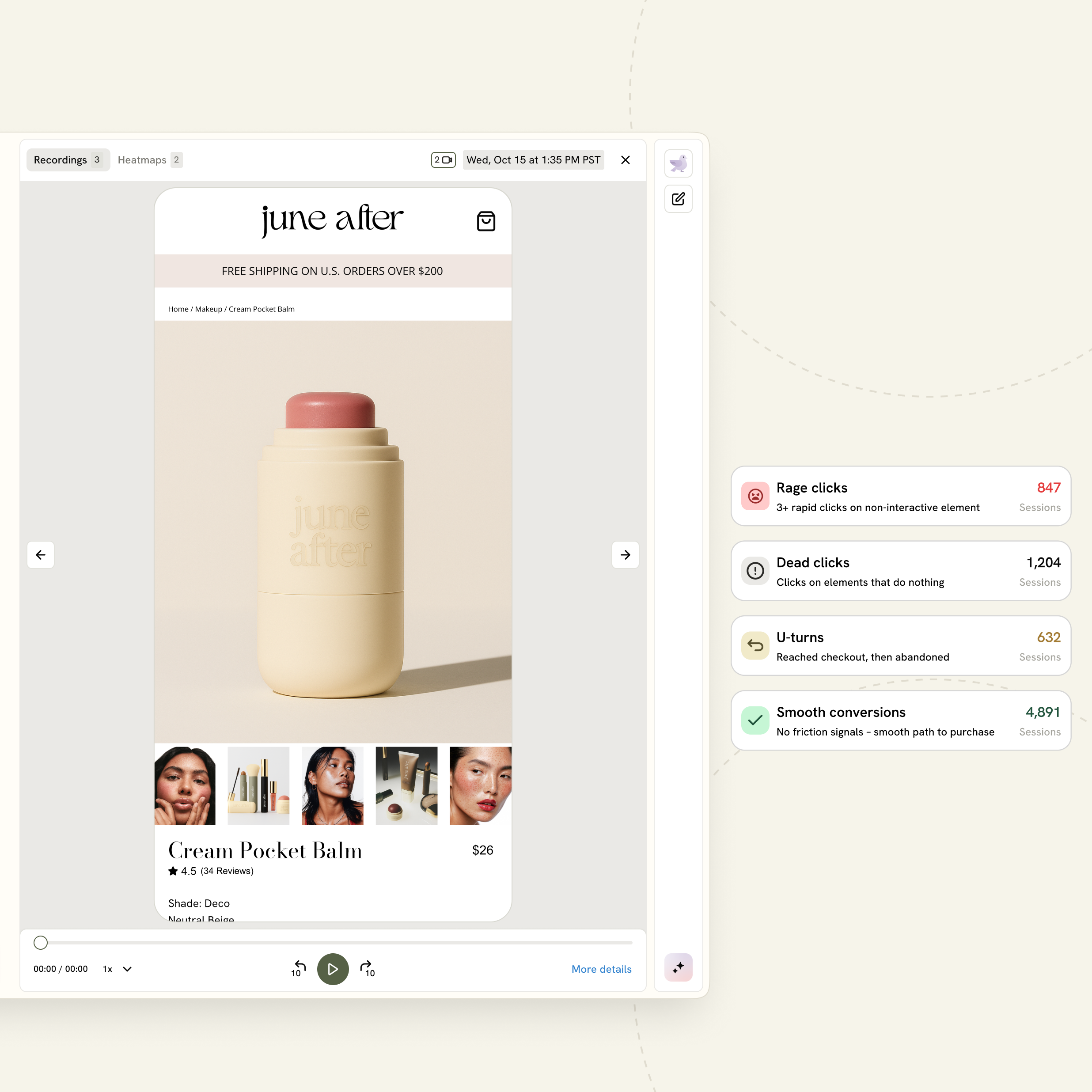
An agent that tracks rage clicks, dead clicks, U-turns, scroll thrash, and error clicks and classifies anomalies in context (PDP vs. checkout vs. account), scores them by revenue impact, and ties them to the URL, device, and session where it happened.
Scheduled Reports
Recurring behavioral reports powered by Pierre, configured in plain language. Teams set a cadence (daily, weekly, or monthly) and receive auto-generated, branded PDFs in their inbox. On-demand runs are available any time a report is needed between cycles.
Intelligent Session Filtering
Filter recordings by the dimensions that actually matter: revenue contribution, cart value, traffic source, device, time on page and anomaly type.
Contextual Heatmaps
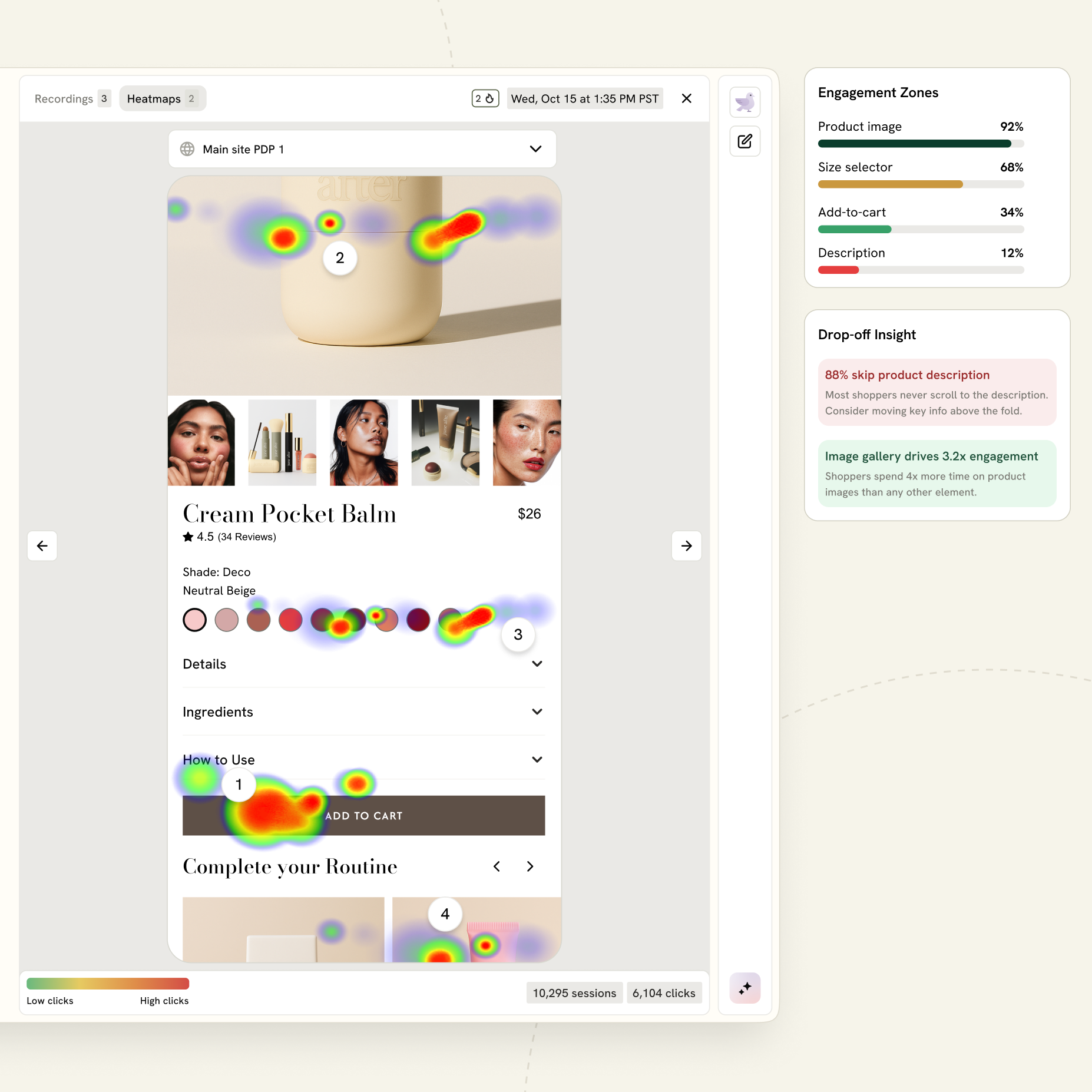
Click, scroll, and attention maps live inside each anomaly report, next to the session clip and the revenue number - so the pattern, the evidence, and the impact are all conveniently on one screen.
Availability
Commerce Graph is available today to all FERMÀT customers. Existing customers should reach out to their account managers for access. Teams not yet on FERMÀT can request a personalized report here.
Built by the team at FERMÀT Commerce.
FERMÀT’s AI Search Commerce Engine generates first-party, shoppable content that drives discovery across leading AI tools.
