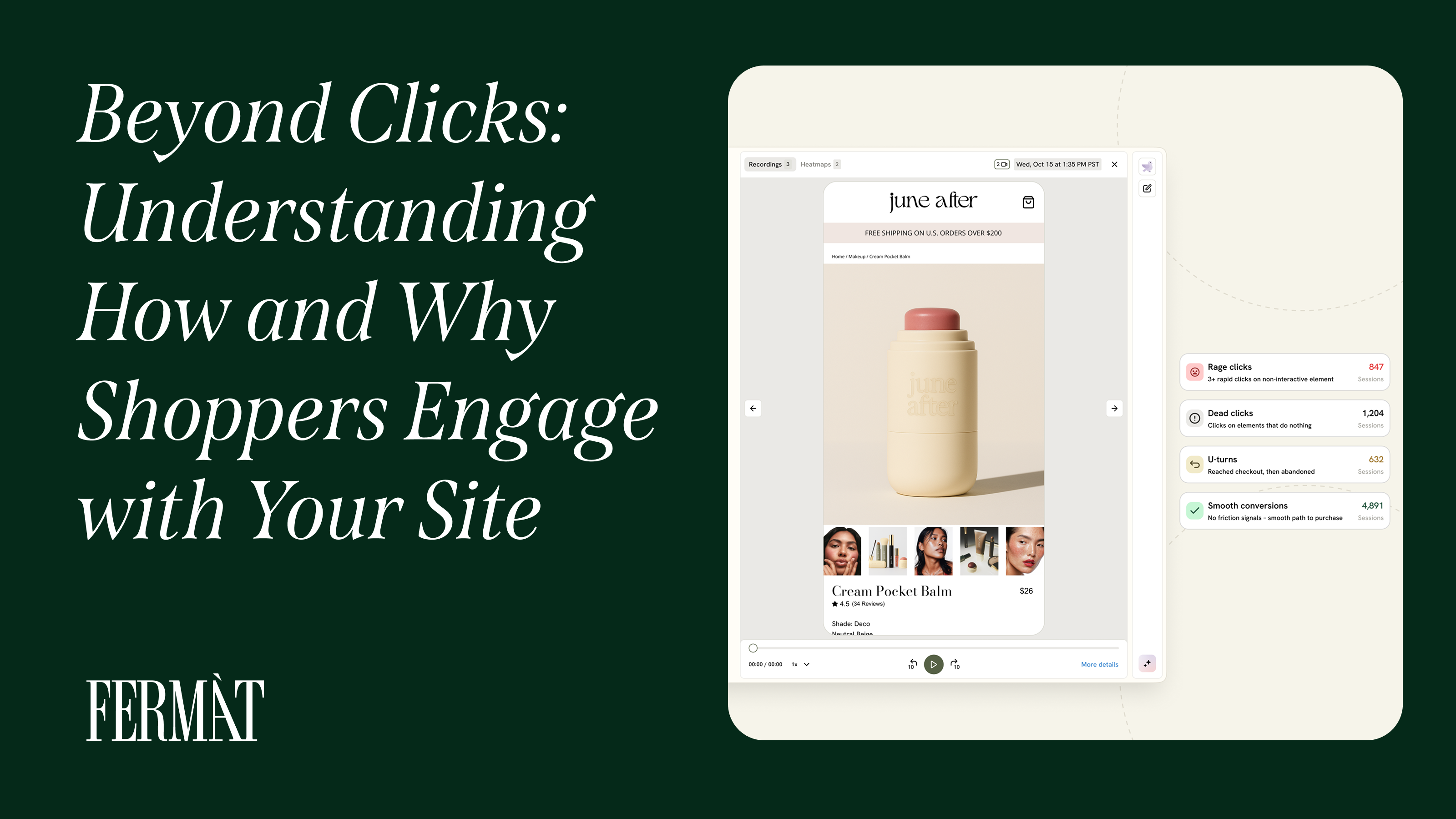
Beyond Clicks: Understanding How and Why Shoppers Engage with Your Site

written by Rishabh Jain
CEO & Co-founder, FERMÀT
CEO & Co-founder, FERMÀT
April 21, 2026

Author:
Ashley Peña
April 21, 2026
For twenty years, ecommerce has worked the same way. Track what people click, group them into buckets, send each bucket the same message, check the results, and do it again.
At FERMÀT, we've spent years building commerce experiences for brands. We've seen this cycle up close. A team spots shoppers abandoning carts at checkout, assumes it's a pricing issue or trust, implements a fix, watches the numbers change, and starts the process all over again. They're guessing based on incomplete information.
That approach made sense when it was all we had, but there was a limitation that no amount of software could fix: the tracking could see what someone did, but not why.
The market has felt that gap for years:
More tools, more data, same blind spot.
AI has fundamentally changed what's possible.
For the first time, an AI agent can process every shopping session, interpret the full behavioral sequence, and learn why someone bought, hesitated, or left. The constraint that defined ecommerce for two decades, measurement without understanding, is gone. But only if AI is embedded in the commerce experience itself, learning from every interaction as it happens.
That's why we built Commerce Graph.
The old world: measuring what happened.
Consider a typical setup: a brand builds its website on Shopify, then layers on Google Analytics for traffic, Hotjar for session recordings, Klaviyo for emails, and a CDP to try to stitch it all together. Each tool captures a slice of what happened after the fact.
The current consumer understanding is based on a biased interpretation of a small sample that is neither scalable nor representative.
A survey says customers want faster checkout. Session recordings appear to confirm it. But the behavioral data across hundreds of thousands of sessions might tell a completely different story: the real friction is not speed but confusion about which product to choose. Actions speak louder than words, and louder than a human watching five recordings.
The new world: understanding why it happened.
When the same platform that creates the shopping experience also captures every interaction within it, you move from observation to understanding. The system knows what every element on the page is designed to do, so when a shopper hesitates, skips, or engages, an AI agent can interpret that behavior against the full context of the experience.
No human team can do this across a hundred thousand sessions. An agent embedded in the experience can, building profiles that get smarter with every visit instead of segments you update manually every quarter.
Here’s the difference in practice.
The old way: "This shopper is a woman, 25-34, who bought skincare twice in the last 90 days."
The new way: "This shopper compares across three brands before buying. She reads reviews but only pays attention to ones that mention specific ingredients. She leaves when she hits conflicting product claims. She buys when a bundle reduces the number of decisions she has to make."
The first is a set of facts. The second is understanding. Getting from one to the other requires an architecture that most commerce stacks cannot support.
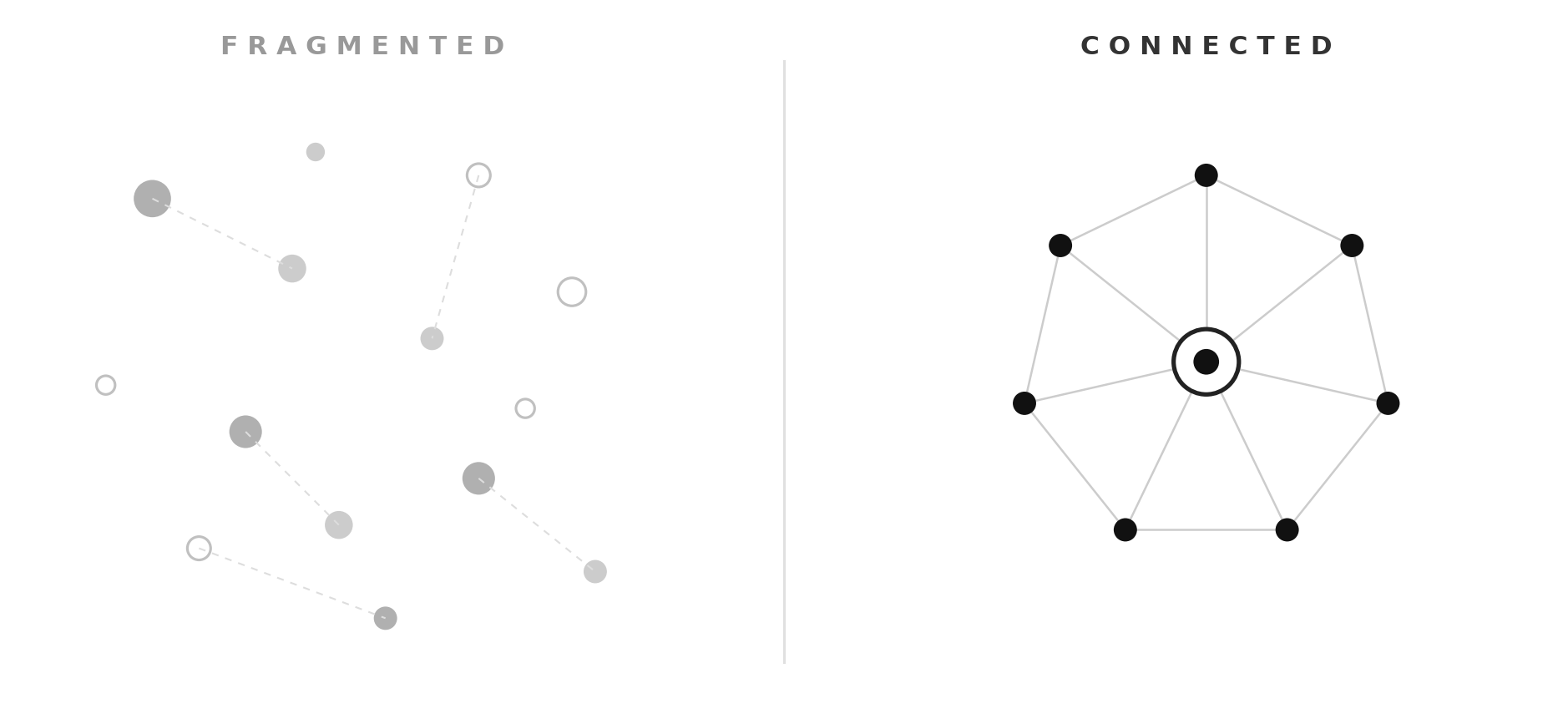
If your measurement tool is separate from your commerce platform, you can count clicks, but you cannot capture why someone clicked or what they were trying to accomplish. You cannot build profiles that actually learn, because the system measuring behavior has no control over the experience generating it.
What if you layer AI on top of your tech stack?
Layering AI on top only gives it access to what each tool already captured, and no individual tool captures the full picture. Connecting fragmented tools produces a more sophisticated view of the fragments, but it does not produce understanding.
FERMÀT builds the commerce experience and captures the complete session. One integrated platform, where the agent is part of the experience itself. Every session makes Commerce Graph smarter, every improvement it drives generates richer behavioral data, and that data fuels the next round of experimentation.
This feedback loop is the foundation of Commerce Graph. Only a platform that builds the experience and measures it can produce this kind of intelligence.
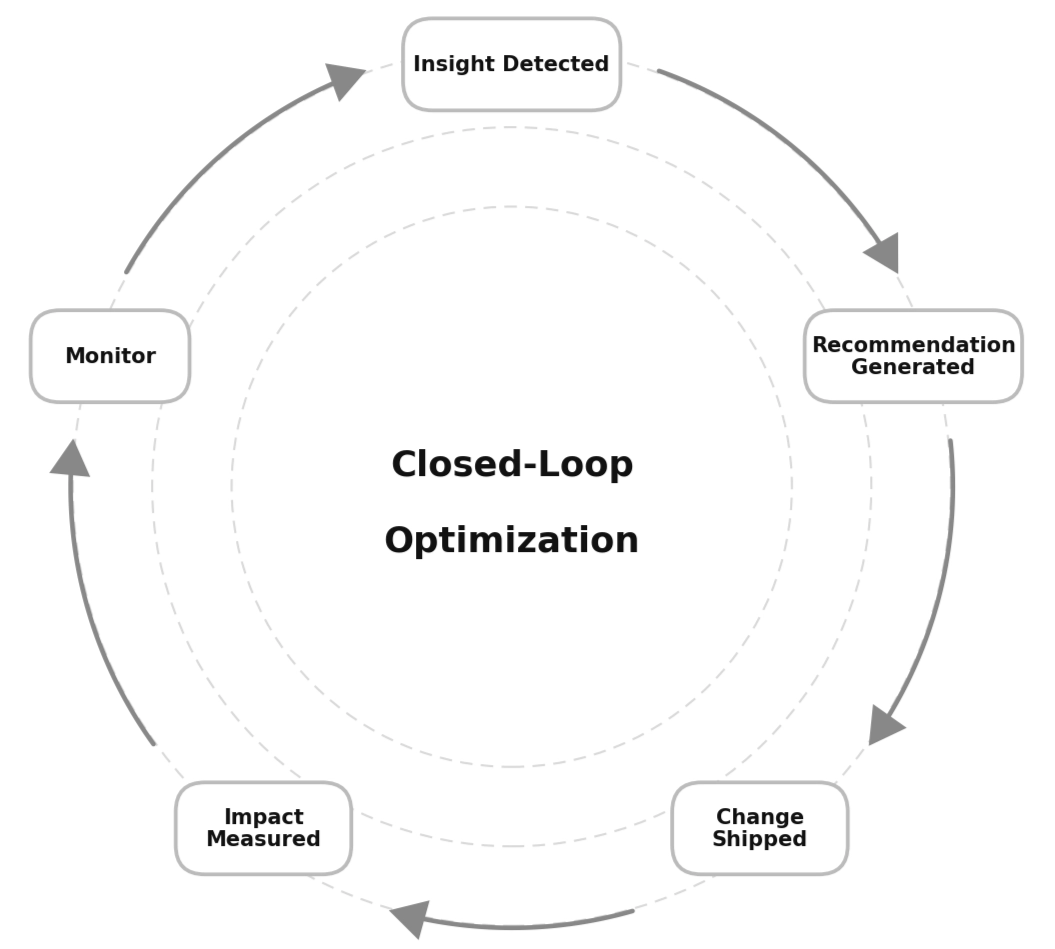
Commerce Graph does not stop at the insight. It closes the loop. When the system detects a pattern, it surfaces what should change. When you approve it, it builds the test, runs it, and measures the outcome.
A large retailer's analytics dashboard showed healthy traffic and steady add-to-cart rates. The team was focused on optimizing ad spend and landing pages, the usual levers. Nothing in their reporting suggested an urgent problem. When Commerce Graph went live, it captured the full behavioral sequence of every session. Within weeks, it surfaced a pattern hiding in plain sight:
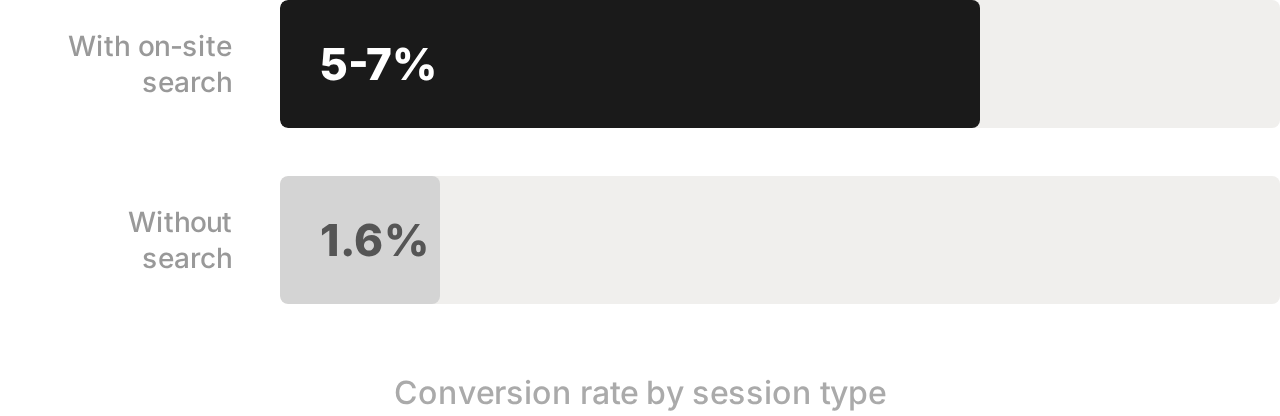
The conventional playbook would have the team testing new page layouts, adjusting product recommendations, and refining audience targeting. Commerce Graph pointed somewhere else entirely: the highest-converting behavior on the site was one that 92% of shoppers never engaged in.
The insight: search was the site's discovery engine, and the layout was hiding it. The team is now rebuilding the experience to surface the behavior that actually drives purchase.
Commerce Graph surfaced the insight, recommended the change, and is now measuring the result. That closed loop, from pattern to action to outcome, is what separates this from analytics.
Every large retailer has invested heavily in analytics. The dashboards look great, there is no shortage of data, and the groups are carefully maintained.
Yet, none of it tells you why your customers buy.
The answer is not another tool on top of the stack. Commerce Graph is a different architecture, one where an AI agent learns from every interaction inside the experience it builds. The brands that adopt it will understand their shoppers in ways their competitors cannot.
The question is whether you’ll be one of them.
